Where Your Product Is Going
The Formula Is
Half the Answer.
A product that is straightforward in one market can be impossible in another, and the difference is rarely quality. It is classification, permitted ingredients, and who has to be established locally before anything can be sold. These pages set out what each market actually requires.
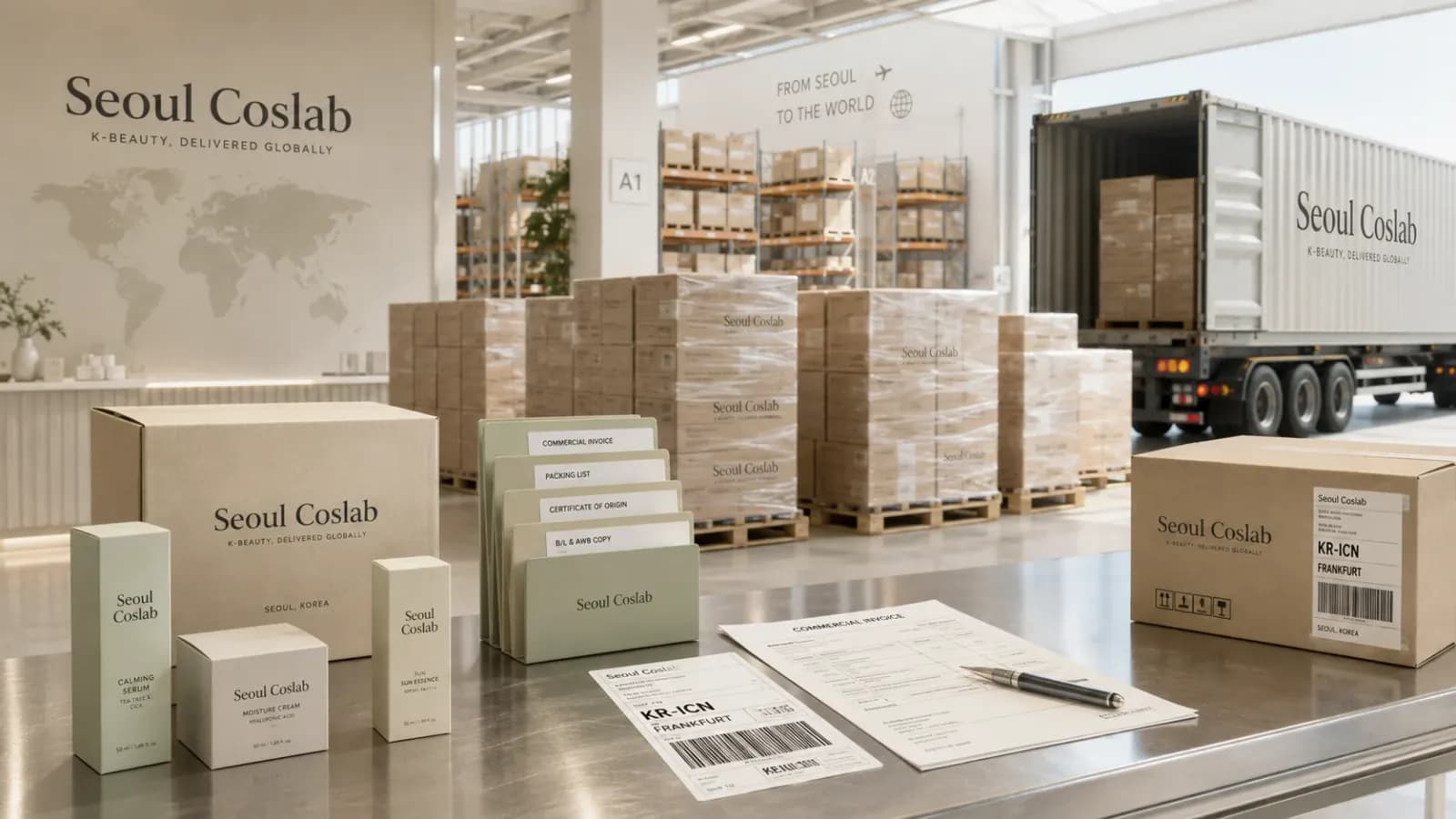
The three questions that decide a market.
| Market | Pre-market step | Who must be local | Sunscreen is |
|---|---|---|---|
| United StatesNorth America | No pre-market approval for cosmetics. Facility registration and product listing are required. | A responsible person named on the label — it need not be US-established, but the label must carry a US address, US phone number or electronic contact for adverse event reports. | Regulated as an over-the-counter drug, not a cosmetic. |
| European UnionEurope | CPNP notification and a completed Product Information File before placing on the market. | A Responsible Person established in the EU. | Regulated as a cosmetic, with UV filters restricted to Annex VI. |
| United KingdomEurope | SCPN notification before placing on the market. | A Responsible Person established in the United Kingdom. | Regulated as a cosmetic, with its own UK annex of permitted UV filters. |
| JapanEast Asia | Cosmetics: notification by the licence holder. Quasi-drugs: item-by-item approval. | A Japanese marketing authorization holder (化粧品製造販売業許可), plus a manufacturing licence for domestic storage or labelling where that activity applies. | A cosmetic, with SPF and PA labelling under an industry standard. |
| TaiwanEast Asia | Product notification (登錄) with the TFDA before supply — often described as registration — for every cosmetic. There is no longer a separate licensing tier above it. | A business registered in Taiwan holding the registration. | No separate category, but the filters are governed — Taiwan publishes its own table and also accepts filters that the EU, the United States or Japan permit, used on those terms. A sun protection claim needs supporting evidence in the file. |
| VietnamSoutheast Asia | Cosmetic product notification before import and sale. | A Vietnamese entity holding the notification and importing the product. | A cosmetic, subject to the ASEAN permitted UV filter list. |
| IndonesiaSoutheast Asia | BPOM notification before import and sale. | An Indonesian entity holding the importer licence and the notification. | A cosmetic, subject to the ASEAN permitted UV filter list. |
| MalaysiaSoutheast Asia | Notification to NPRA before the product is sold. No pre-market approval. | A company incorporated in Malaysia holding the notification. | A cosmetic, subject to the ASEAN permitted UV filter list. |
| ThailandSoutheast Asia | Notification to the Thai FDA before manufacture, import or sale. | A Thai entity holding the notification and importing the product. | A cosmetic, subject to the ASEAN permitted UV filter list. |
| SingaporeSoutheast Asia | Notification to HSA before the product is supplied. No pre-market approval. | A company registered in Singapore holding the notification. | A cosmetic, subject to the ASEAN permitted UV filter list. |
| United Arab EmiratesMiddle East | Product registration and conformity assessment before sale. | A UAE-registered importer or distributor holding the trade licence. | A cosmetic, subject to the applicable GCC standard for UV filters. |
| PolandCentral Europe | CPNP notification before placing on the market. | A Responsible Person established in the EU. | Regulated as a cosmetic, with UV filters restricted to Annex VI. |
- United StatesNorth America
- Pre-market step
- No pre-market approval for cosmetics. Facility registration and product listing are required.
- Who must be local
- A responsible person named on the label — it need not be US-established, but the label must carry a US address, US phone number or electronic contact for adverse event reports.
- Sunscreen is
- Regulated as an over-the-counter drug, not a cosmetic.
- European UnionEurope
- Pre-market step
- CPNP notification and a completed Product Information File before placing on the market.
- Who must be local
- A Responsible Person established in the EU.
- Sunscreen is
- Regulated as a cosmetic, with UV filters restricted to Annex VI.
- United KingdomEurope
- Pre-market step
- SCPN notification before placing on the market.
- Who must be local
- A Responsible Person established in the United Kingdom.
- Sunscreen is
- Regulated as a cosmetic, with its own UK annex of permitted UV filters.
- JapanEast Asia
- Pre-market step
- Cosmetics: notification by the licence holder. Quasi-drugs: item-by-item approval.
- Who must be local
- A Japanese marketing authorization holder (化粧品製造販売業許可), plus a manufacturing licence for domestic storage or labelling where that activity applies.
- Sunscreen is
- A cosmetic, with SPF and PA labelling under an industry standard.
- TaiwanEast Asia
- Pre-market step
- Product notification (登錄) with the TFDA before supply — often described as registration — for every cosmetic. There is no longer a separate licensing tier above it.
- Who must be local
- A business registered in Taiwan holding the registration.
- Sunscreen is
- No separate category, but the filters are governed — Taiwan publishes its own table and also accepts filters that the EU, the United States or Japan permit, used on those terms. A sun protection claim needs supporting evidence in the file.
- VietnamSoutheast Asia
- Pre-market step
- Cosmetic product notification before import and sale.
- Who must be local
- A Vietnamese entity holding the notification and importing the product.
- Sunscreen is
- A cosmetic, subject to the ASEAN permitted UV filter list.
- IndonesiaSoutheast Asia
- Pre-market step
- BPOM notification before import and sale.
- Who must be local
- An Indonesian entity holding the importer licence and the notification.
- Sunscreen is
- A cosmetic, subject to the ASEAN permitted UV filter list.
- MalaysiaSoutheast Asia
- Pre-market step
- Notification to NPRA before the product is sold. No pre-market approval.
- Who must be local
- A company incorporated in Malaysia holding the notification.
- Sunscreen is
- A cosmetic, subject to the ASEAN permitted UV filter list.
- ThailandSoutheast Asia
- Pre-market step
- Notification to the Thai FDA before manufacture, import or sale.
- Who must be local
- A Thai entity holding the notification and importing the product.
- Sunscreen is
- A cosmetic, subject to the ASEAN permitted UV filter list.
- SingaporeSoutheast Asia
- Pre-market step
- Notification to HSA before the product is supplied. No pre-market approval.
- Who must be local
- A company registered in Singapore holding the notification.
- Sunscreen is
- A cosmetic, subject to the ASEAN permitted UV filter list.
- United Arab EmiratesMiddle East
- Pre-market step
- Product registration and conformity assessment before sale.
- Who must be local
- A UAE-registered importer or distributor holding the trade licence.
- Sunscreen is
- A cosmetic, subject to the applicable GCC standard for UV filters.
- PolandCentral Europe
- Pre-market step
- CPNP notification before placing on the market.
- Who must be local
- A Responsible Person established in the EU.
- Sunscreen is
- Regulated as a cosmetic, with UV filters restricted to Annex VI.
This information is provided for general guidance only and is not legal or regulatory advice. Each market page cites the primary sources it draws on.
Markets
- North America
United States
U.S. Food and Drug Administration (FDA)
Requirements → - Europe
European Union
European Commission and national competent authorities
Requirements → - Europe
United Kingdom
Office for Product Safety and Standards (OPSS)
Requirements → - East Asia
Japan
Ministry of Health, Labour and Welfare (MHLW) and prefectural authorities
Requirements → - East Asia
Taiwan
Taiwan Food and Drug Administration (TFDA), Ministry of Health and Welfare
Requirements → - Southeast Asia
Vietnam
Drug Administration of Vietnam, Ministry of Health
Requirements → - Southeast Asia
Indonesia
BPOM (National Agency of Drug and Food Control)
Requirements → - Southeast Asia
Malaysia
National Pharmaceutical Regulatory Agency (NPRA), Ministry of Health Malaysia
Requirements → - Southeast Asia
Thailand
Food and Drug Administration (Thai FDA), Ministry of Public Health
Requirements → - Southeast Asia
Singapore
Health Sciences Authority (HSA), Health Products Regulation Group
Requirements → - Middle East
United Arab Emirates
Ministry of Industry and Advanced Technology and relevant local authorities
Requirements → - Central Europe
Poland
Chief Sanitary Inspectorate (GIS) and the Bureau for Chemical Substances
Requirements →
We cover a shortlist of markets in depth rather than every market at a paragraph each. If you are selling somewhere not listed, tell us where — the underlying documentation is the same and the market-specific work is what we would scope for you.
What actually changes
Classification
The same product can be a cosmetic in one market and a drug in another. Sunscreen is the clearest case — a cosmetic in the EU, Japan and across ASEAN, an over-the-counter drug in the United States. Classification is decided by intended use and claim, not by formula.
Permitted ingredients
Every market runs its own lists of prohibited, restricted and positively-listed materials. UV filters diverge most; preservatives and colourants diverge often enough to matter. The check belongs at the start of formulation.
Who must be established locally
A responsible person, a licence holder or a local notification holder — most markets on this list require a locally established party, though the exact role differs and the US is the notable exception: under MoCRA the responsible person need not be US-established as long as the label carries a US contact. A Korean manufacturer cannot fill these market-entry roles for you.
What you may say
Claim rules differ more than formulation rules. A claim that is routine in Korea can require an approved active elsewhere, or move the product into a different category entirely. Agreeing the claim set early is cheaper than reprinting artwork.
We document. Your local entity registers.
- Quantitative formula disclosure as the market requires, arranged under the project agreement, with raw material specifications
- Certificates of analysis by batch
- Stability and challenge test reports
- Manufacturing method and facility documentation
- Free sale and origin documentation
- The responsible person, licence holder or local notification holder
- Registration, notification and renewal
- Safety assessment where the market requires a local assessor
- Label translation and final artwork approval
- Importer of record and customs entry
This information is provided for general guidance only and is not legal or regulatory advice.
Frequently Asked Questions
Which market should we enter first?
Usually the one where you already have a route to the customer — a distributor, a retail conversation, an existing audience. Regulatory difficulty is a poor first filter because the work is front-loaded and transferable in a way commercial access is not. The exception is a product whose category is treated differently somewhere, such as sunscreen in the United States, where the classification can rule a market out before commercial factors matter.
Can one product be sold in every market without changes?
Rarely, and the differences are usually in the label and the claim set rather than in the formula. Where the formula does have to change it is normally because of a restricted ingredient, a UV filter that is not permitted, or a claim that requires an approved active in that market. Telling us every destination during development is what keeps that list short.
Who handles registration — the manufacturer or the brand?
Registration and notification are generally filed by an entity established in the destination market — a responsible person, a licence holder or a local importer depending on the country, with the US as the notable exception: under MoCRA the responsible person need not be US-established as long as the label carries a US contact. A Korean manufacturer cannot fill these market-entry roles for you. We coordinate the manufacturing-side documentation that party needs, and the handover point is set out on each market page.
How many markets should a first launch cover?
Fewer than most plans assume. Each market adds registration cost, label artwork, documentation and inventory commitment, and those costs are per market rather than shared. Two markets done properly usually outperform five done thinly, and the second is much cheaper to add once the documentation exists.
Start Your Product Brief
Let’s Create
What’s Next in Beauty.
Tell us every market you intend to sell in, including the ones twelve months away. It changes the formula, not just the label.
Start Your Product Brief →This page is general information for manufacturing planning. It is not legal or regulatory advice, it has no legal effect, and no rights can be derived from it. Requirements change by market and over time — before acting on anything here, confirm the current position with the authority concerned or with qualified counsel.