Seoul Coslab Intelligence
What Buyers
Actually Ask Us.
Our insights focus on the questions buyers repeatedly face when manufacturing in Korea — what a model costs you in time, why a minimum order is what it is, what a market requires before your product can be sold there.
Insights
 Manufacturing
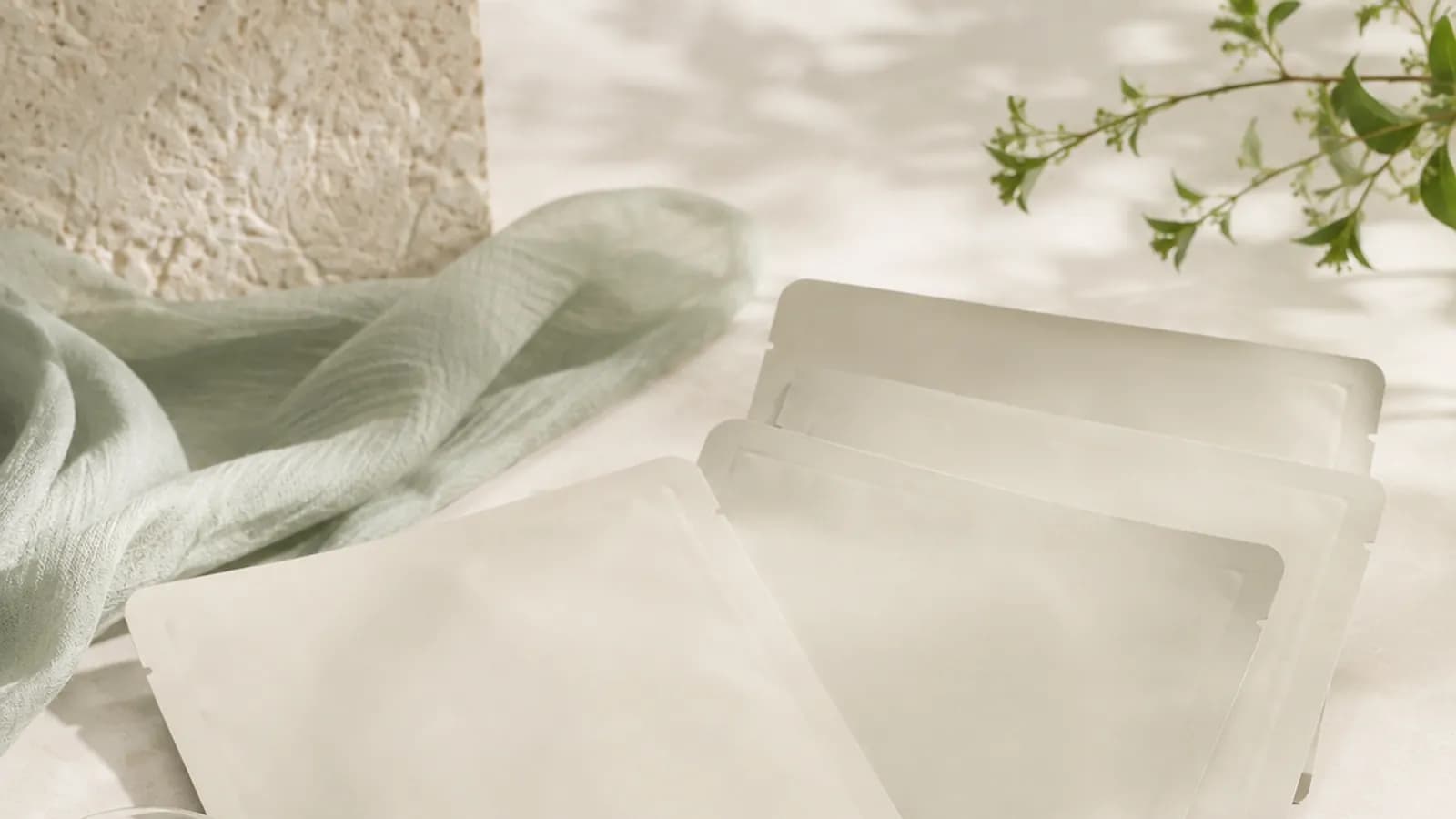
Sheet Mask and Toner Pad OEM: A Minimum of 1,000 Boxes
A sheet mask run with us starts at 10,000 sheets — 1,000 boxes. Quotes elsewhere run several times higher. Here is why ours sits where it does.
Read Product Development
Choosing the Right First Product for Your Brand
Launch one product, prove demand, then extend. The nine questions to put to each candidate, and why five SKUs is the most expensive way to start.
Read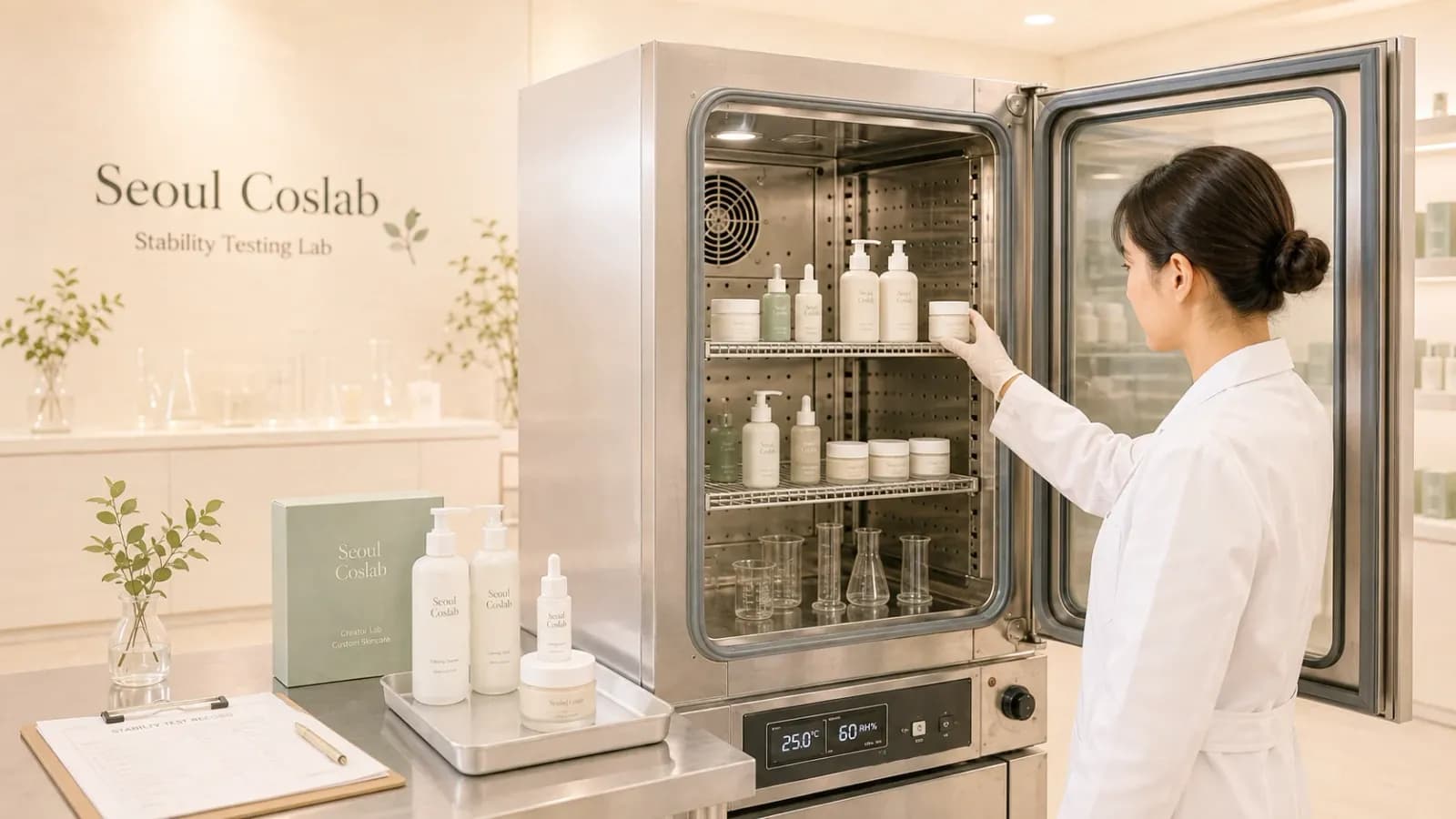 Business & Brand Launch
Ten Mistakes Brands Make Manufacturing in Korea
Ten mistakes that cost brands money manufacturing cosmetics in Korea — what each one actually costs, when it becomes expensive, and how to avoid it.
Read ODM & OEM
Why a Manufacturing Partner, Not Just a Factory
A factory sells production capacity. Choosing the right one and holding several suppliers to one date is a separate job — and where projects go wrong.
Read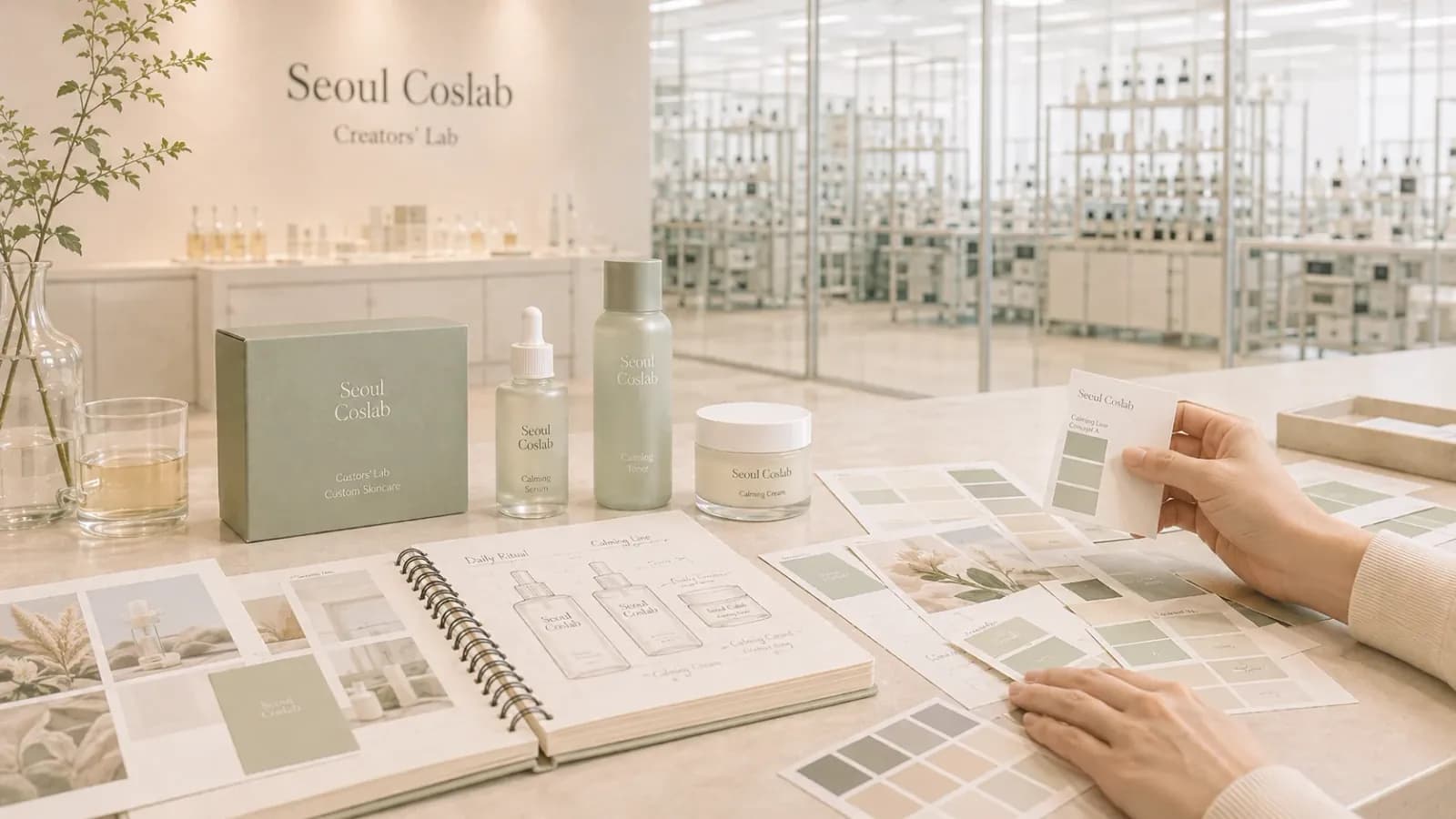 Product Development
How to Benchmark a Product Without Copying It
Benchmarking reads proven demand. Copying takes work that is not yours. The nine axes to break a reference product down on, and the line between them.
Read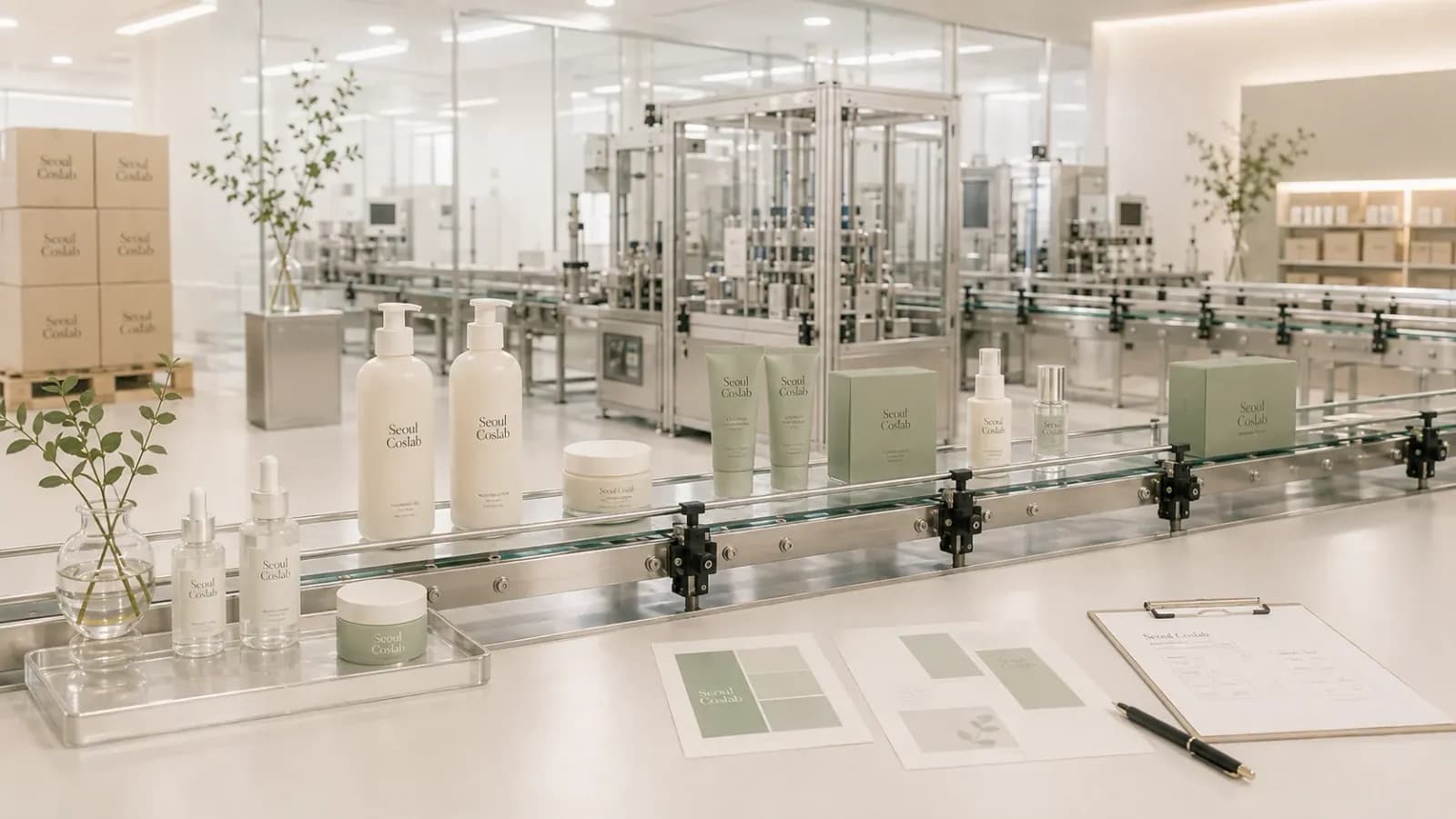 Business & Brand Launch
Why Manufacture Your Beauty Products in Korea?
Why manufacture cosmetics in Korea? Not for the label — for an industry split into specialists, and what that structure changes about your timeline.
Read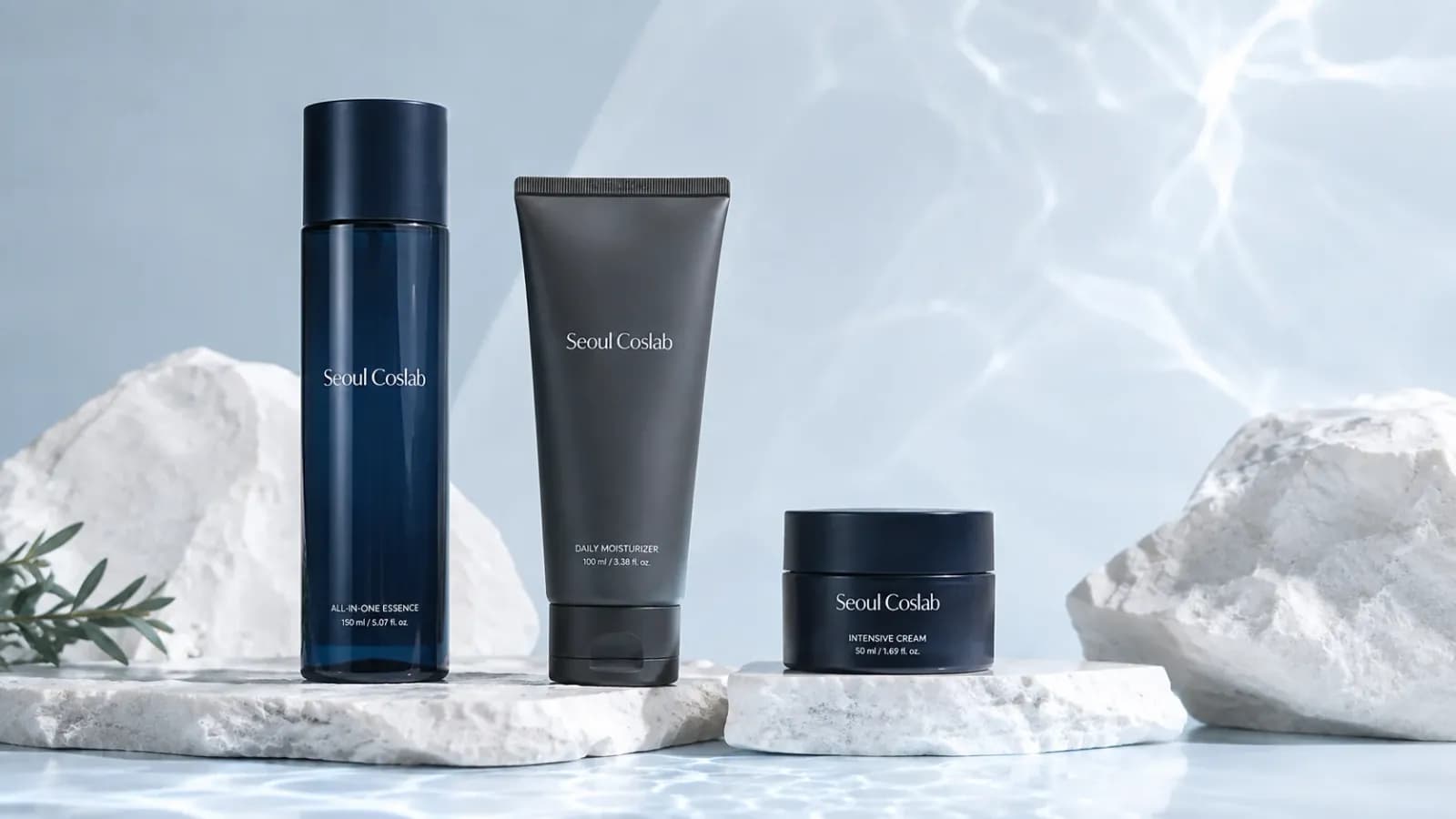 K-Beauty Trends
Korean Skincare Best Sellers — 16 August 2026 Baseline
Twelve skincare products, one capture, no previous week to compare against. What the formats, the claim axes and the price band say about a brief.
Read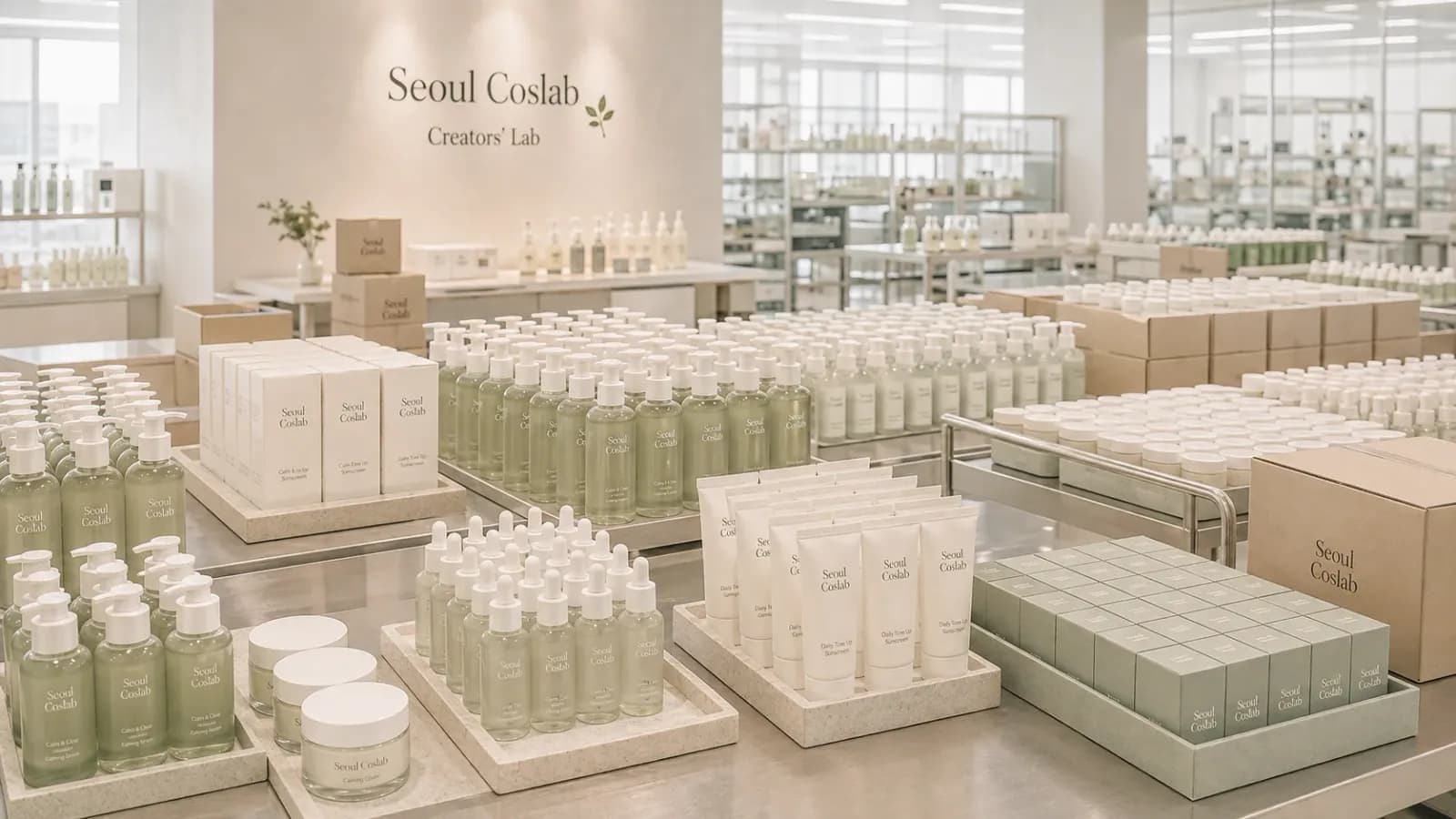 Business & Brand Launch
Private Label Cosmetics for Direct Selling and MLM Brands
Direct selling puts demand in waves, sales on a few products, and the product description in hundreds of mouths. What each of those asks of production.
Read Regulations & Compliance
Halal Certification for a Korean-Made Cosmetic
Halal certification assesses raw material origin, processing aids and the production line, not only the ingredient list. The schemes differ by market.
Read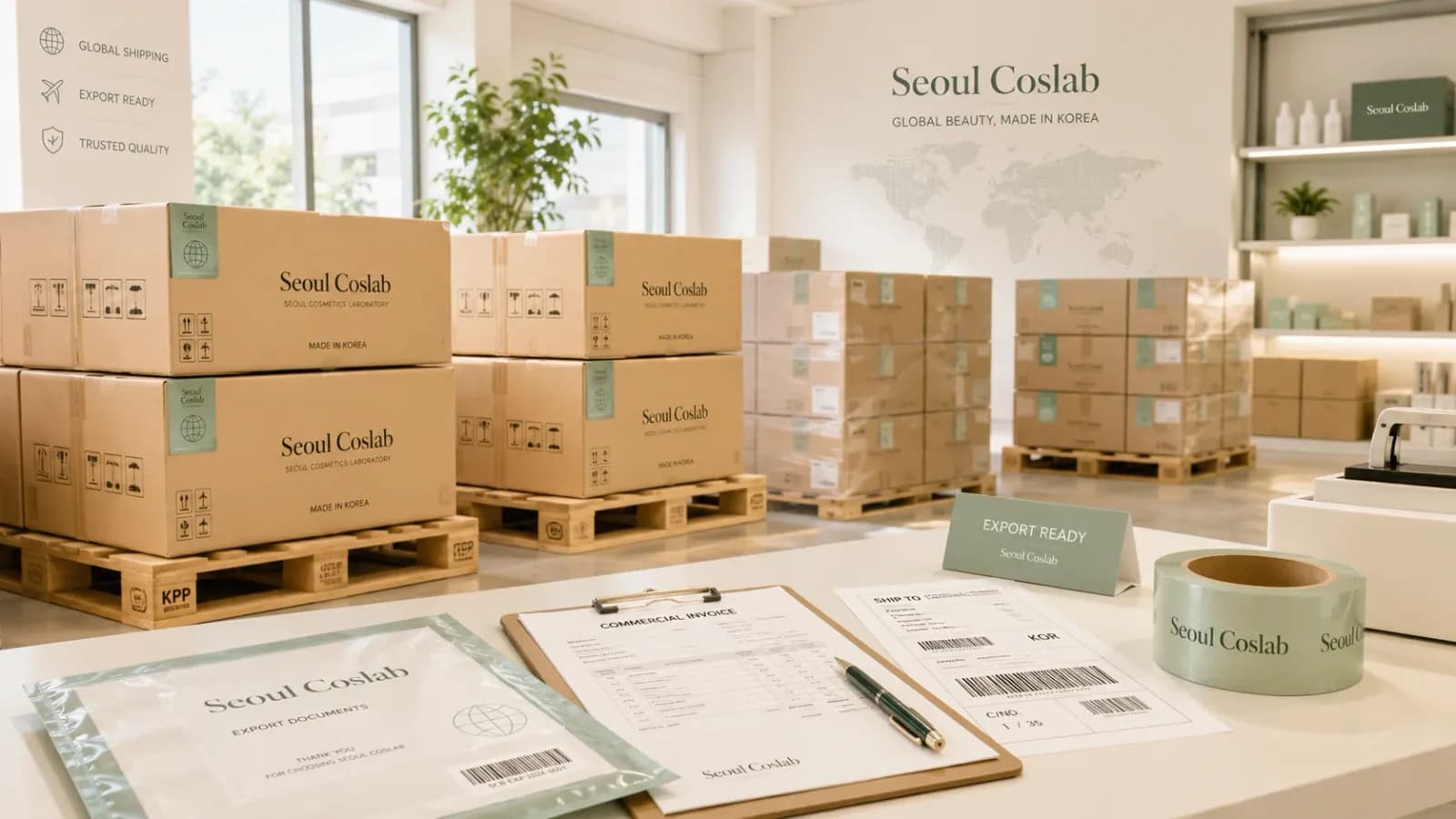 Regulations & Compliance
Export Documents for Korean Cosmetics: CFS, CoA and GMP
What a certificate of free sale, a certificate of analysis and a GMP certificate each prove — and why they cannot be collected in any order you like.
Read Product Development
Korean Sunscreen Manufacturing: Claims and Market Limits
In sun care, one formula rarely serves every market. Why permitted UV filter lists differ by market, and what that asks of a development plan.
Read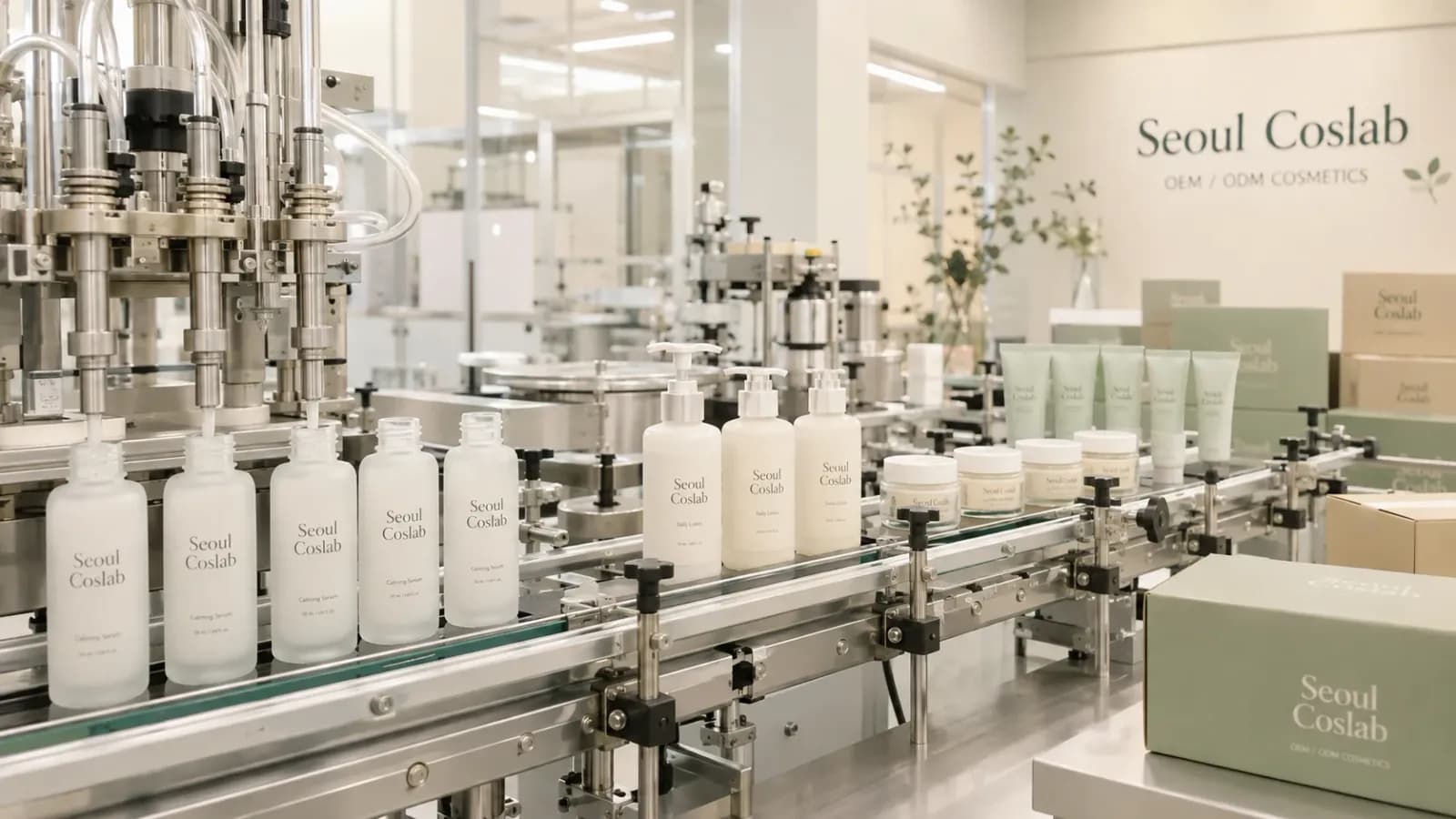 Manufacturing
Korean Cosmetics Lead Time: From Brief to Delivered Stock
Lead time is a chain of stages, not one number. What stretches each link, which links overlap, and where the critical path of a launch really sits.
Read Manufacturing
What Is MOQ in Cosmetics — And Why Manufacturers Have One
A minimum order is not a policy a factory chooses. It is the number that falls out of batch sizes, component minimums and the fixed costs of a run.
Read Packaging
Cosmetic Packaging MOQ: Stock vs Custom Components
Component minimums usually set the floor for a first production run. How stock and custom parts differ, and why each part carries its own minimum.
Read Product Development
The Sampling Process: How Many Rounds, and What Each Costs
Sample rounds are not free iterations — each spends calendar and attention. What each round settles, what makes the count grow, and when to stop.
Read Business & Brand Launch
How to Reduce Your Cosmetic MOQ Without Losing Quality
A minimum order moves when one of its inputs moves. Seven levers a buyer actually controls, and what each one costs you that is not quality.
Read K-Beauty Trends
K-Beauty Ingredient Trends Buyers Are Sourcing Now
Where k-beauty ingredient trends are moving, read from buyer briefs — biotech actives, barrier lipids, soothing botanicals — and how to source each well.
Read ODM & OEM
Private Label vs Your Own Formula: What You Actually Own
Both routes put your name on the bottle. What private label actually makes yours, what an owned formula adds, and what the agreement decides between them.
Read Packaging
Airless Pump vs Dropper: Choosing a Serum Package
The pack is a formulation decision, not a branding one. What airless pumps, droppers, tubes, jars and ampoules cost you in preservation and unit price.
Read Business & Brand Launch
Clean Beauty Claims: What They Mean and What They Cost
Clean beauty is not a regulated term. What free-from, vegan, natural and reef-safe actually commit you to, and which ones a retailer will audit.
Read Business & Brand Launch
What a Cosmetic Product Actually Costs to Develop
The line items a per-unit quote leaves out — development, testing, tooling, artwork, registration — and which of them you can actually move.
Read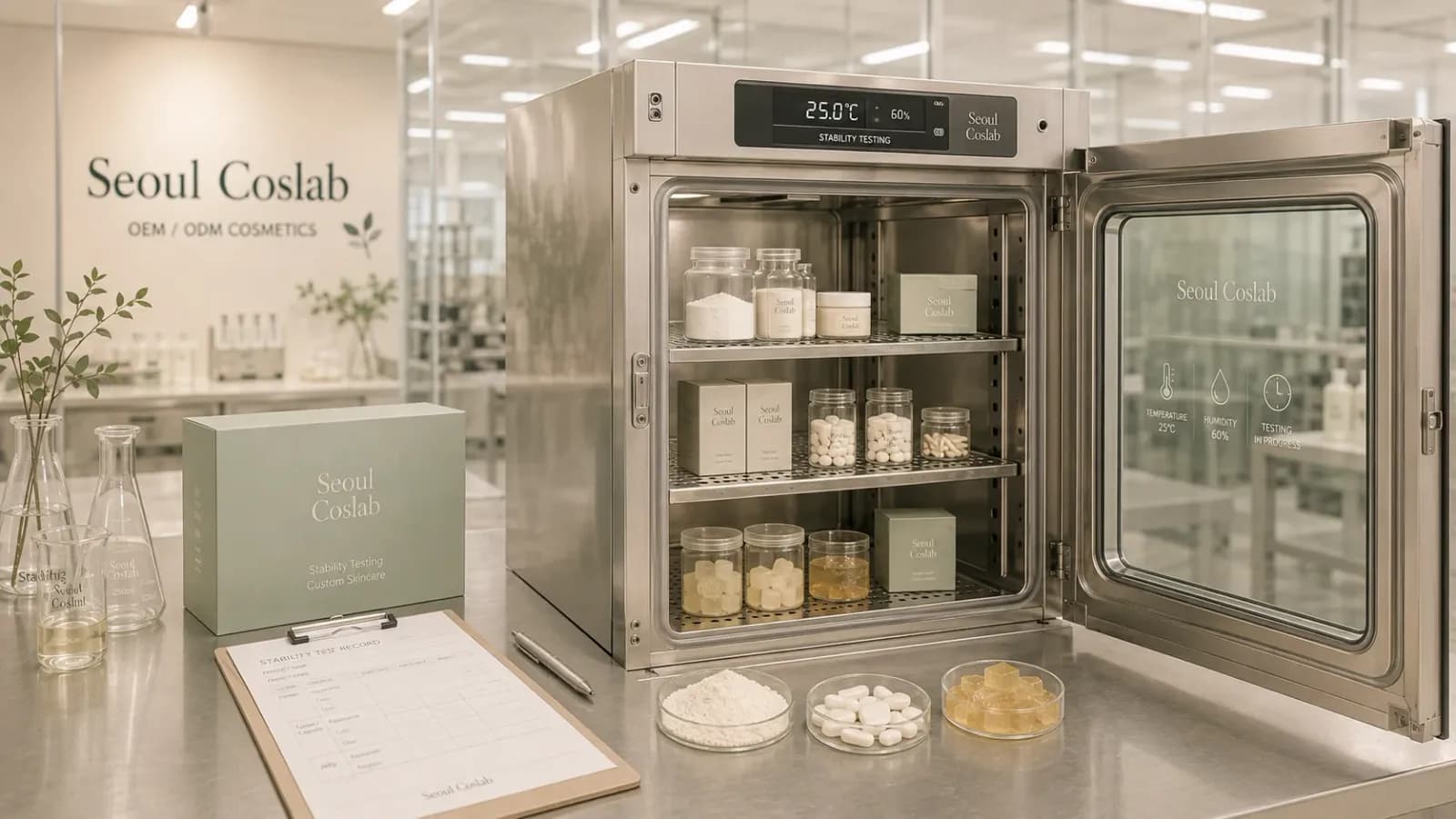 Manufacturing
Cosmetic Stability Testing: What It Tells You, and When
Why stability sits on the critical path of every launch, what accelerated testing can and cannot tell you, and which failures only appear in real time.
Read Regulations & Compliance
CPNP Notification for a Korean-Made Cosmetic
The EU route in the order it happens — annex check, Responsible Person, Product Information File, safety report, then notification. What each step needs.
Read Product Development
How to Brief a Korean Formulation Lab So You Get It Right
A vague brief costs you revision rounds, not money up front. What a Korean formulation lab actually needs from you, in the order it needs it.
Read K-Beauty Trends
K-Beauty Trends, Read From the Briefs We Receive
Trend lists are written for consumers. This one is written from development briefs — what brands are actually asking us to build, and which asks age badly.
Read Business & Brand Launch
Launching a Skincare Brand From Zero: The Whole Path
Every decision between an idea and stock on a shelf, in the order it has to be made — and which ones are expensive to change once you have moved past them.
Read Regulations & Compliance
MoCRA: What an Imported Cosmetic Actually Needs
MoCRA in the order it affects an imported product — who the responsible person is, what registration and listing cover, and what substantiation means.
Read ODM & OEM
OEM vs ODM vs Private Label: Which Model Fits Your Brand
The three cosmetic manufacturing models compared on what they actually change: who owns the formula, what it costs you in time, and who carries which risk.
Read Product Development
Sheet Masks: What Decides the Fabric and the Essence
Sheet masks look simple and are not. Fabric choice, essence loading, fit and sachet barrier each decide something the others cannot fix.
Read ODM & OEM
How to Vet a Korean Cosmetics Supplier Before You Commit
The questions that separate a partner from a broker — who owns the formula, who holds the certifications, and what a quote is deliberately not telling you.
Read
Categories
ODM & OEM
4 publishedProduct Development
6 publishedPackaging
2 publishedManufacturing
4 publishedRegulations & Compliance
4 publishedK-Beauty Trends
3 publishedBusiness & Brand Launch
7 published
Explore Korean Cosmetic Manufacturing