Korean Private Label Skincare and White Label Manufacturing
Private label puts an existing, production-ready Korean formula into your packaging and your branding. It is the shortest path from decision to stock on hand, and the honest limit is that the formula is not yours and not unique.
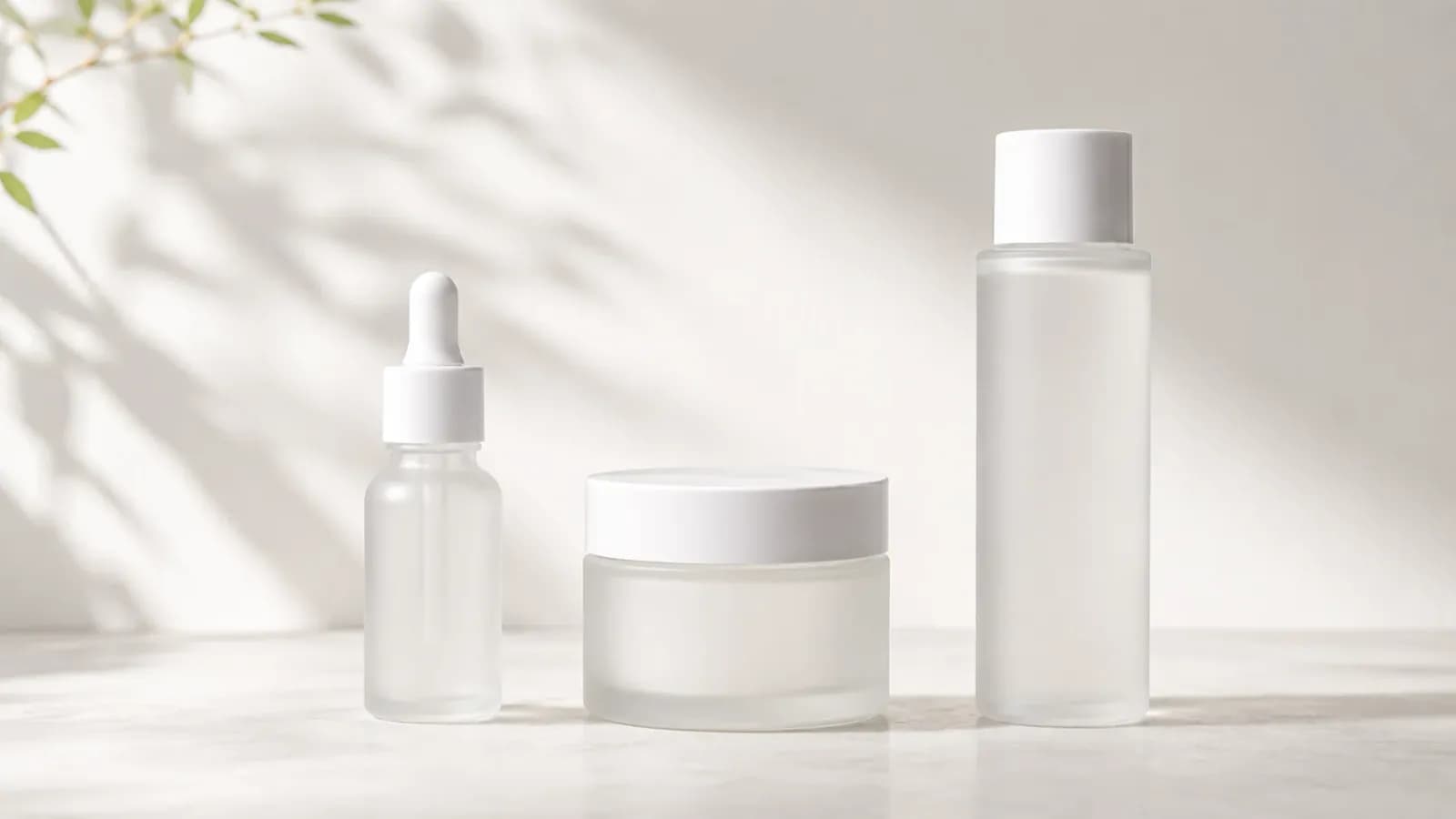
What it means
You select from finished products a manufacturer already makes. Branding, packaging and labelling are yours. The formula is not modified, or only within narrow bounds such as fragrance or colour.
Because there is no formulation work and no stability programme to re-run, lead time and minimum volume are both lower than ODM or OEM. That is the entire advantage, and for testing a market it is a substantial one.
Who it is for
- 01Distributors testing whether a category sells before committing to development
- 02Retailers and salons wanting a house range without a development budget
- 03New brands validating positioning before investing in a proprietary formula
- 04Businesses that need stock in months rather than quarters
What we handle
Product selection
We shortlist finished products against your positioning and price point, and tell you plainly where a formula is widely used by other brands.
Branding and artwork
Label and carton artwork prepared to the printer’s specification, with the mandatory declarations your destination market requires.
Packaging selection
Chosen from stock components where speed matters, or custom where the shelf presence justifies the longer lead time and higher minimum.
Regulatory labelling
Ingredient declaration, warnings and responsible-person details set correctly for where you are selling.
Production and delivery
Filling, labelling, inspection and export documentation.
Manufacturing through contracted Korean partners, matched to your product — every order made in Korea. Certifications depend on the selected manufacturing partner and project requirements.
Frequently Asked Questions
What is the difference between private label and white label?
The terms are used interchangeably in this industry. Both mean an existing product sold under your brand. Where a distinction is drawn, white label usually implies a product offered to many buyers unchanged, and private label implies some degree of exclusivity or customisation.
Can I change the formula in a private label product?
Only within narrow bounds — typically fragrance, colour or fill size. Anything beyond that turns the project into ODM, because the changed formula needs its own stability and compatibility work.
Will another brand sell the same product?
Very likely, unless exclusivity is agreed. We tell you when a formula is in wide use so the decision is informed. If differentiation is central to your positioning, ODM is the better starting point.
Why is private label faster than ODM?
There is no formulation cycle and no new stability programme. The remaining work is packaging, artwork, regulatory labelling and production scheduling.
Other routes to the same product.
Related services
Find the Right Manufacturing Solution
Let’s Create
What’s Next in Beauty.
Tell us the category, the market and roughly what volume you can commit to. We will come back with what is realistic.
Find the Right Manufacturing Solution →